Thursday, October 17, 2013


Dear Carrie Voeks,


Everyday and every moment that I was apart of your life was a miracle for me. I finally knew what it was like to be apart of a family. After you left, I never felt so completely alone. Since the days have become years and that life is just a memory. I hold it dear to my heart and will never forget the love that I have and had for you. I think of you always sometimes with joy and sometimes with tears. I wonder how are you and and hope that you are happy. Please forgive me for the things that I have said and thoughts that were filled with frustration and anger. I can only thank God for the time that we had and the many joys and happiness we experienced together. I will always love you.

Sincerely,

Dan 


Wednesday, October 24, 2012

You are always in my heart


You are always in my heart
Even though you're far away
I can hear the music of
The song of love
I sang with you
You are always in my heart
And when skies above are grey
I remember that you care
And then and there
The sun breaks through


Just before I go to sleep
 there's a rendezvous I keep
 And a dream I always meet
 Helps me forget were far apart
 I don't know exactly when, dear,
 But Im sure well meet again, dear,
 And my darling, till we do
 You are always in my heart!


Wednesday, August 1, 2012

Happy Birthday Carrie Voeks!!!
I love you and miss you.
I hope you have a wonderful Birthday.
I wish I could be there.
8/9/12

Thursday, August 25, 2011

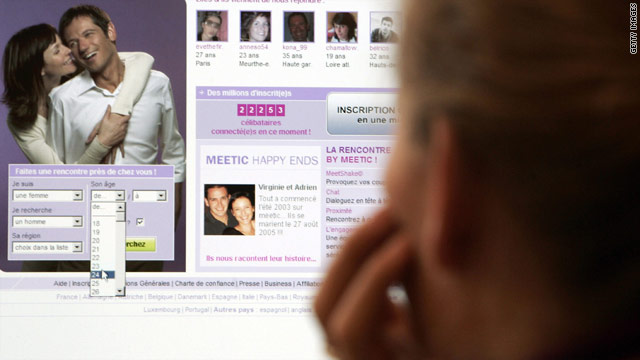
Online dating? Why no one wants you


If you're young, urban and didn't import a significant other from college, it's pretty likely that you're on an online dating site. Let's just admit that right now.

Online dating doesn't make you a creepy loser. Your collection of taxidermied frogs does. Moving on ...

Tons of folks are hooking up with future life partners (or dates or flings or accommodating couples) via the Web nowadays. People who aren't completely awkward, that is. And the place where that awkwardness has the most opportunity to shine is, undoubtedly, in your first message to a potential swain.

Granted, a lot of online dating is scrolling through photos, immediately weeding out "not my type," "holding a baby" and "just a torso," but even if someone deems you attractive (ironic mustache and all), a travesty of a first message can ruin all chances of romance.

Your missive doesn't have to be Pulitzer-worthy, by any means -- although spell check really doesn't hurt -- but there's a whole passel of openers that will get you deleted from a digital dater's heart.

1). The generalizer

Example: hey, wuts up?

Why no one wants you: You're probably stupid. Or possibly illiterate. What's going on with you? Something cool? OK, tell him/her about that, instead. Nothing at all? Go out and cultivate a hobby of some sort, and then get back to us.

2). The autobiographer

Example: Hi! My name is Sandi! I moved to L.A. from Oklahoma a couple of months ago and, I have to say, I'm lovin' it! I just adore walking my 6-year-old Pomeranian, Marshmallow, along Venice Beach!

I'm currently working as a receptionist at a dentist's office, but when I'm not answering all those phones, I really enjoy kicking back with some Lilian Jackson Braun (that cat is SO SMART, solving all those mysteries). Oh! Did I mention I majored in Life Sciences in college and lost my virginity at age 27? Anyway, tell me about YOU!

Why no one wants you: Well, what else is there to find out? We kind of feel like we've already dated you, and we were bored the first time around.

You wouldn't sit down at a bar and tell someone your life story (that role is reserved for the old and deranged), so choose something you and the dude have in common and start with that. There's plenty of time later to run out of things to say.

3). The "eccentric"

Example: Holy Cheezburgers! You sure are a purty lady! I would love to take you down to the playground and push you on the swings! And then we can go to the zoo! Or to the ocean to build a giant sand castle by the sea!

I'll stomp on it and you'll be pissed, but you'll get over it because I'm just so gosh-darned charming. (I'll also be wearing a rather irresistible bow tie -- with a motor!) Write me back, sweet child o' mine -- that sure would be fine (that rhymed!).

Why no one wants you: We are afraid you will murder us in our sleep. Hey, it's great that you're a nonconformist who has his own trained tarantula circus, and any girl who's into well-behaved bugs is sure to dig you, but trying too hard to be interesting is just that: trying too hard.

4). The robot

Example: Hi! I came across your profile and it intrigued me. I'm looking for a smart man with passion and drive, and you seem to be it! Want to get a drink sometime?

Why no one wants you: You probably sent the same message to half of OKCupid ... and Match.com ... and eHarmony ... and JDate. Yeah, dating is a numbers game and whatnot, but no one wants to be number 1,000. Take, say, three minutes to pound out a more personal message. As we have already established (see #2), we don't need your life story.

5). The creeper

Example: I want to ****** ***** with your **** ******. And then ***** **** all night long. Oh, here's a picture of my junk.

Why no one wants you: We'll let you know after we examine that snapshot. Kidding (maybe). You know that section where the girl/guy has indicated what s/he's "looking for"? Unless "casual sex" is listed, cease and desist with the sexting.

6). The gusher

Example: Oh my, you are extremely handsome, you know that? Like, you look like a movie star! And you like all of my favorite books! "The Da Vinci Code!" It changed my LIFE! I'm sure you're WAY TOO AWESOME to ever go for a girl like me, but, wow, man, I hope you deign to answer this lowly message because your eyes are like starshine.

Why no one wants you: Kindly detach yourself from my leg. According to an OKCupid study, calling someone "sexy," "beautiful" or "hot" is a huge turnoff in a first message. If you ever want to stare into those "starshine" eyes in person, hold the compliments until you're trying to get into said person's pants.

7). The wordless wonder

Example: You have been added to PatrickBatemanIsTheMan's Favorite's List!

Why no one wants you: This is the grown-up equivalent of asking your friend's friend to ask me if I like you -- but, you know, not so grown-up. Man up and say something, while avoiding numbers 1 through 6, that is.

Tuesday, August 2, 2011

Happy Birthday Carrie Voeks


Happy Birthday to you
Happy Birthday dear Carrie,
Happy Birthday to you.


8/9/11

Tuesday, May 10, 2011

The Tricky Chemistry of Attraction


Much of the attraction between the sexes is chemistry. New studies suggest that when women use hormonal contraceptives, such as birth-control pills, it disrupts some of these chemical signals, affecting their attractiveness to men and women's own preferences for romantic partners. Researchers say birth control pills are upending the natural influence of hormones on attraction. WSJ's Shirley Wang reports on a new study in lemurs that show how contraceptives may influence the way the primates pick and choose their mates.


The type of man a woman is drawn to is known to change during her monthly cycle—when a woman is fertile, for instance, she might look for a man with more masculine features. Taking the pill or another type of hormonal contraceptive upends this natural dynamic, making less-masculine men seem more attractive, according to a small but growing body of evidence. The findings have led researchers to wonder about the implications for partner choice,
relationship quality and even the health of the children produced by these partnerships.

Evolutionary psychologists and biologists have long been interested in factors that lead to people's choice of mates. One influential study in the 1990s, dubbed the T-shirt study, asked women about their attraction to members of the opposite sex by smelling the men's T-shirts. The findings showed that humans, like many other animals, transmit and recognize information pertinent to sexual attraction through chemical odors known as pheromones.

The study also showed that women seemed to prefer the scents of men whose immune systems were most different from the women's own immune-system genes known as MHC. The family of genes permit a person's body to recognize which bacteria are foreign invaders and to provide protection from those bugs. Evolutionarily, scientists believe, children should be healthier if their parents' MHC genes vary, because the offspring will be protected from more pathogens.

Couples dancing in a ballroom. When women are ovulating, they tend to be drawn to men with greater facial symmetry and more signals of masculinity, such as muscle tone, a more masculine voice and dominant behaviors.


Seductive Science

What happens to a woman during her most fertile days?
Her voice becomes higher pitched.
Men are more attentive to her, with behavior ranging from thoughtful to jealous.
Her scent becomes more attractive to men.
She seeks men with more masculine features.
Her social behavior changes, including increased flirting.
She tries to look more attractive and may choose more-revealing clothing.
If she is with a less masculine man, she may feel less attracted to him.


More than 92 million prescriptions for hormonal contraceptives, including pills, patches and injections, were filled last year in the U.S., according to data-tracker IMS Health.

Researchers say their aim isn't to scare or stop women from taking hormonal contraceptives. "We just want to know what we're doing" by taking the pill, says Alexandra Alvergne, a researcher in biological anthropology at University College London in the U.K. "If there is a risk it affects our romantic life and the health status of our children, we want to know." Dr. Alvergne last year published a review detailing the existing literature on the topic in the journal Trends in Ecology and Evolution.

Both men's and women's preferences in mates shift when a woman is ovulating, the period when she is fertile, research has shown. Some studies have tracked women's responses to photos of different men, while other studies have interviewed women about their feelings for men over several weeks. Among the conclusions: When women are ovulating, they tend to be drawn to men with greater facial symmetry and more signals of masculinity, such as muscle tone, a more masculine voice and dominant behaviors. The women also seemed to be particularly attuned to MHC-gene diversity. From an evolutionary perspective, these signals are supposed to indicate that men are more fertile and have better genes to confer to offspring.

Women tend to exhibit subtle cues when they are ovulating, and men tend to find them more attractive at this time. Women try to look more attractive, perhaps by wearing tighter or more revealing clothing, says Martie Haselton, a communications and psychology professor at the University of California, Los Angeles. Research on this includes studies in which photos that showed women's clothing choices at different times of the month were shown to groups of judges. Women also emit chemical signals that they are fertile; researchers have measured various body odors, says Dr. Haselton, who has a paper on men's ability to detect ovulation coming out in the journal Current Directions in Psychological Science.

Such natural preferences get wiped out when the woman is on hormonal birth control, research has shown. Women on the pill no longer experience a greater desire for traditionally masculine men during ovulation. Their preference for partners who carry different immunities than they do also disappears. And men no longer exhibit shifting interest for women based on their menstrual cycle, perhaps because those cues signaling ovulation are no longer present, scientists say.

Some women using birth-control pills have long reported changes to their libido and mood. Research is still in the early stages to explore the implications of taking hormonal contraceptives for women's choice of mates and for fidelity in relationships. Researchers speculate that women with less-masculine partners may become less interested in their partner when they come off birth control, contributing to relationship dissatisfaction. And, if contraceptives are masking women's natural ability to detect genetic diversity, then the children produced by parents who met when the woman was on the pill may be less genetically healthy, they suggest.

"We don't have enough research to draw a firm conclusion yet," says Dr. Haselton. "It is certainly possible that if women don't experience that little uptick in [desiring] masculinity that they end up choosing less masculine partners," she says.

That could prompt some women to stray, research suggests. Psychologist Steven Gangestad and his team at the University of New Mexico showed in a 2010 study that women with less-masculine partners reported an increased attraction for other men during their fertile phase. Women partnered with traditionally masculine partners didn't have such urges, according to the study of 60 couples.

In another study, the researchers analyzed MHC gene samples of 48 couples. Women partnered with men with whom they shared the least genetic diversity reported being less sexually responsive to their mates. The study was published in 2006 in the journal Psychological Science.

There is also accumulating evidence indicating men react differently to women when they are on birth control. A 2004 study in the journal in Behavioral Ecology used the T-shirt study methodology but instead put the shirts on 81 women. A panel of 31 men, smelling the T-shirts, experienced the greatest attraction for the non-pill-using women when they were ovulating. Twelve women on the panel didn't detect any difference.

A study on primates appears to support the idea that hormonal contraceptives change mating preferences. Duke University researchers studied hormones secreted by female lemurs before and after the animals received a hormonal contraceptive. They also studied males' preferences for these scents.

The findings, published in the journal Proceedings of the Royal Society, Biological Sciences this year, showed that the injection of Depo-Prevara, a long-lasting contraceptive that is approved for use in humans, dramatically altered the chemicals that female lemurs give off to indicate their identity and how genetically healthy they are.

The females given the contraceptive became overall less appealing to the males than before getting the injection, says Christine Drea, a professor in Duke's evolutionary anthropology department and senior author on the study. The contraceptive erased all the normal information the odor signals conveyed, she says.

Though the study would need to be conducted in humans to draw direct conclusions, there are potential parallels to people, Dr. Drea says. Birth control "could be mixing up your own [signals] and others aren't smelling the real you," she says.

Monday, April 25, 2011

What causes chest pain when feelings are hurt?


When people have their feelings hurt, what is actually happening inside the body to cause the physical pain in the chest?
—Josh Ceddia, Melbourne, Australia

Robert Emery and Jim Coan, professors of psychology at the University of Virginia, reply:

terms such as “heartache” and “gut wrenching” are more than mere metaphors: they describe the experience of both physical and emotional pain. When we feel heartache, for example, we are experiencing a blend of emotional stress and the stress-induced sensations in our chest—muscle tightness, increased heart rate, abnormal stomach activity and shortness of breath. In fact, emotional pain involves the same brain regions as physical pain, suggesting the two are inextricably connected.

But how do emotions trigger physical sensations? Scientists do not know, but recently pain researchers uncovered a possible pathway from mind to body. According to a 2009 study from the University of Arizona and the University of Maryland, activity in a brain region that regulates emotional reactions called the anterior cingulate cortex helps to explain how an emotional insult can trigger a biological cascade. During a particularly stressful experience, the anterior cingulate cortex may respond by increasing the activity of the vagus nerve—the nerve that starts in the brain stem and connects to the neck, chest and abdomen. When the vagus nerve is overstimulated, it can cause pain and nausea.

Heartache is not the only way emotional and physical pain intersect in our brain. Reent studies show that even experiencing emotional pain on behalf of another person—that is, empathy—can influence our pain perception. And this empathy effect is not restricted to humans. In 2006 a paper published in Science revealed that when a mouse observes its cage mate in agony, its sensitivity to physical pain increases. And when it comes into close contact with a friendly, unharmed mouse, its sensitivity to pain diminishes.

Soon after, one of us (Coan) published a functional MRI study in humans that supported the finding in mice, showing that simple acts of social kindness, such as holding hands, can blunt the brain’s response to threats of physical pain and thus lessen the experience of pain. Coan implicated several brain regions involved in both anticipating pain and regulating negative emotions, including the right anterior insula (which helps to regulate motor control and cognitive functioning), the superior frontal gyrus (which is involved in self-awareness and sensory processing) and the hypothalamus (which links the nervous system to the endocrine system).

Although the biological pathways underlying these connections between physical and mental pain are not well understood, studies such as these are revealing how intricate the connection is and how very real the pain of heartache can be.


.